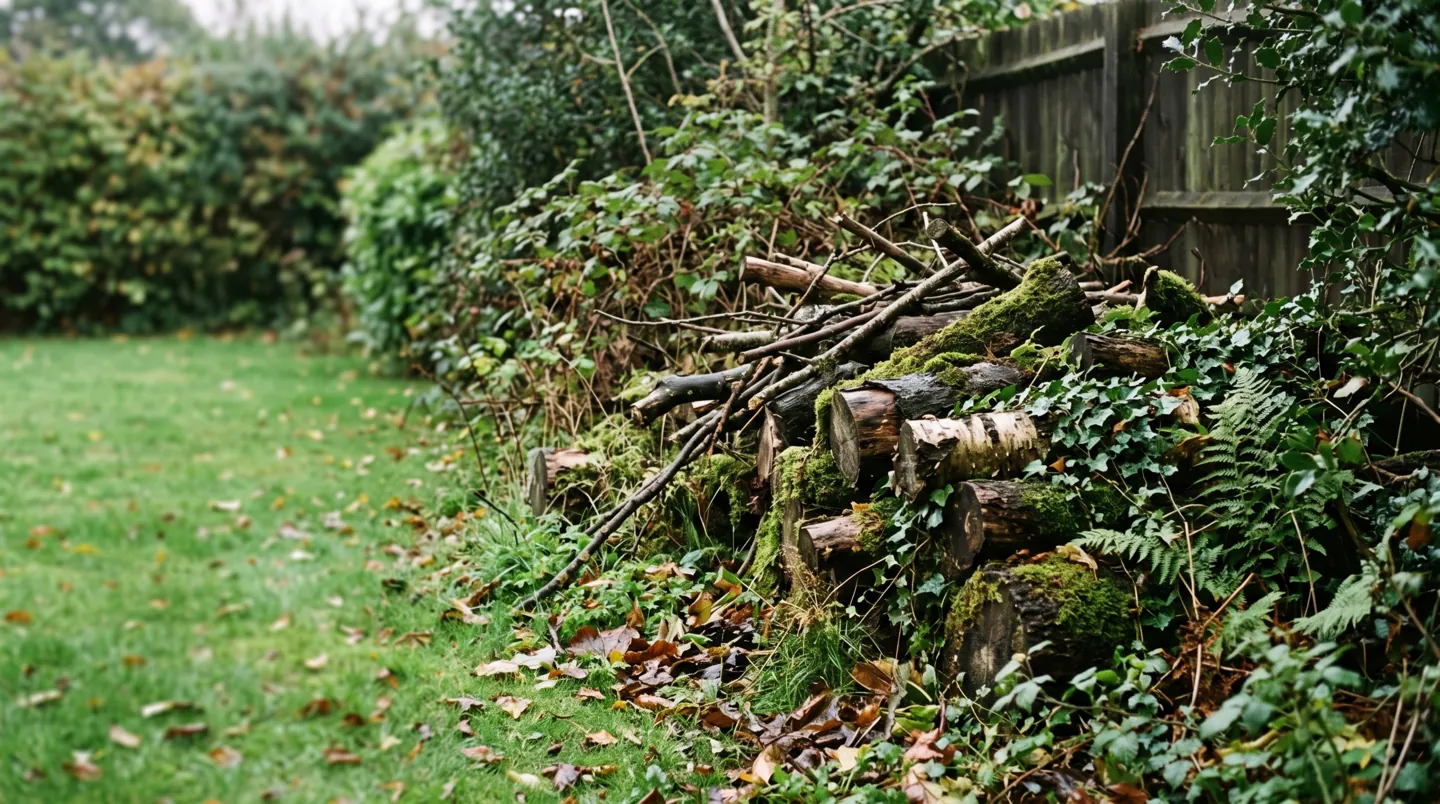
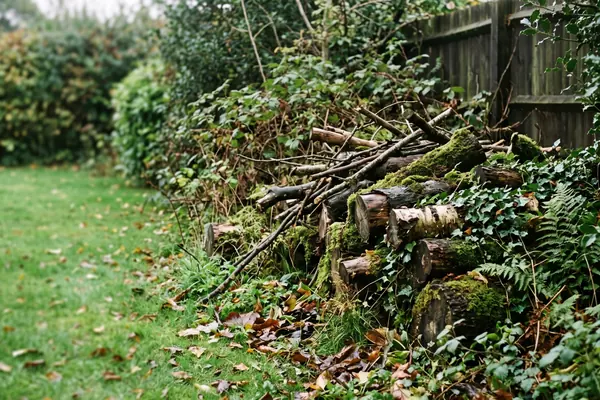
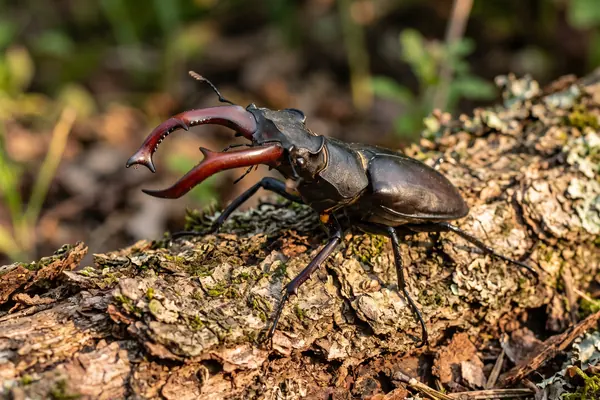
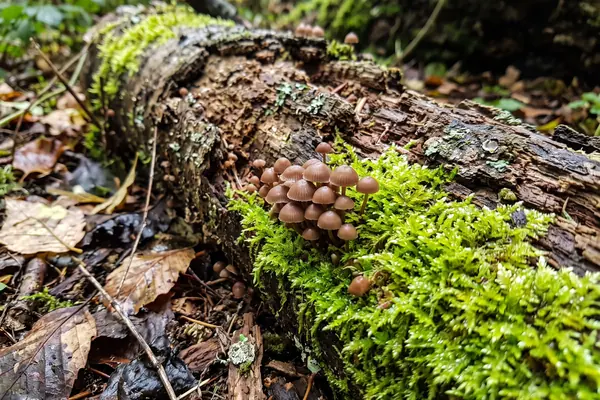
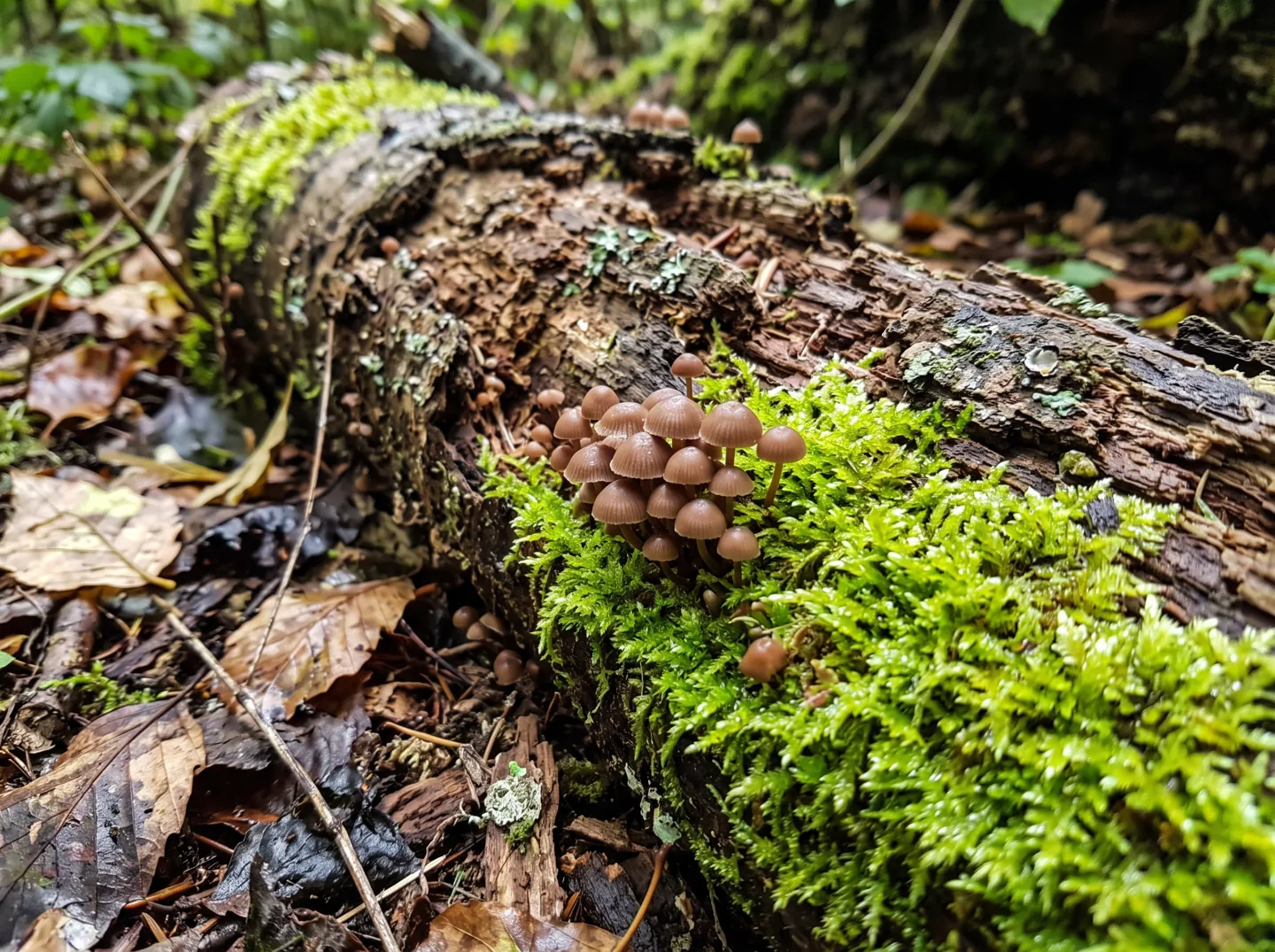
Fungi, mosses, beetles, small mammals and birds all use dead wood. Wildlife charities ask gardeners to keep some: a heap in a corner, a stump left in the ground or a few logs half buried in the soil.
Pick the kind of dead wood you have room for. The bar shows how closely it matches what stag beetles need: damp, rotting wood in contact with the soil.
Based on advice from PTES, Buglife and the Natural History Museum. Any dead wood helps some wildlife.
TWO NUMBERS WORTH KNOWING
Dead wood is full of life.
One figure on how much woodland life depends on it, one on how long a stag beetle needs it.
40%
Share that depends on dead wood
Trees for Life says a remarkable 40% of woodland wildlife depends on dead wood, including fungi, lichens, invertebrates, mosses and birds.
WOODLAND WILDLIFE · TREES FOR LIFE
3–7 years
Average lifespan, mostly as a larva
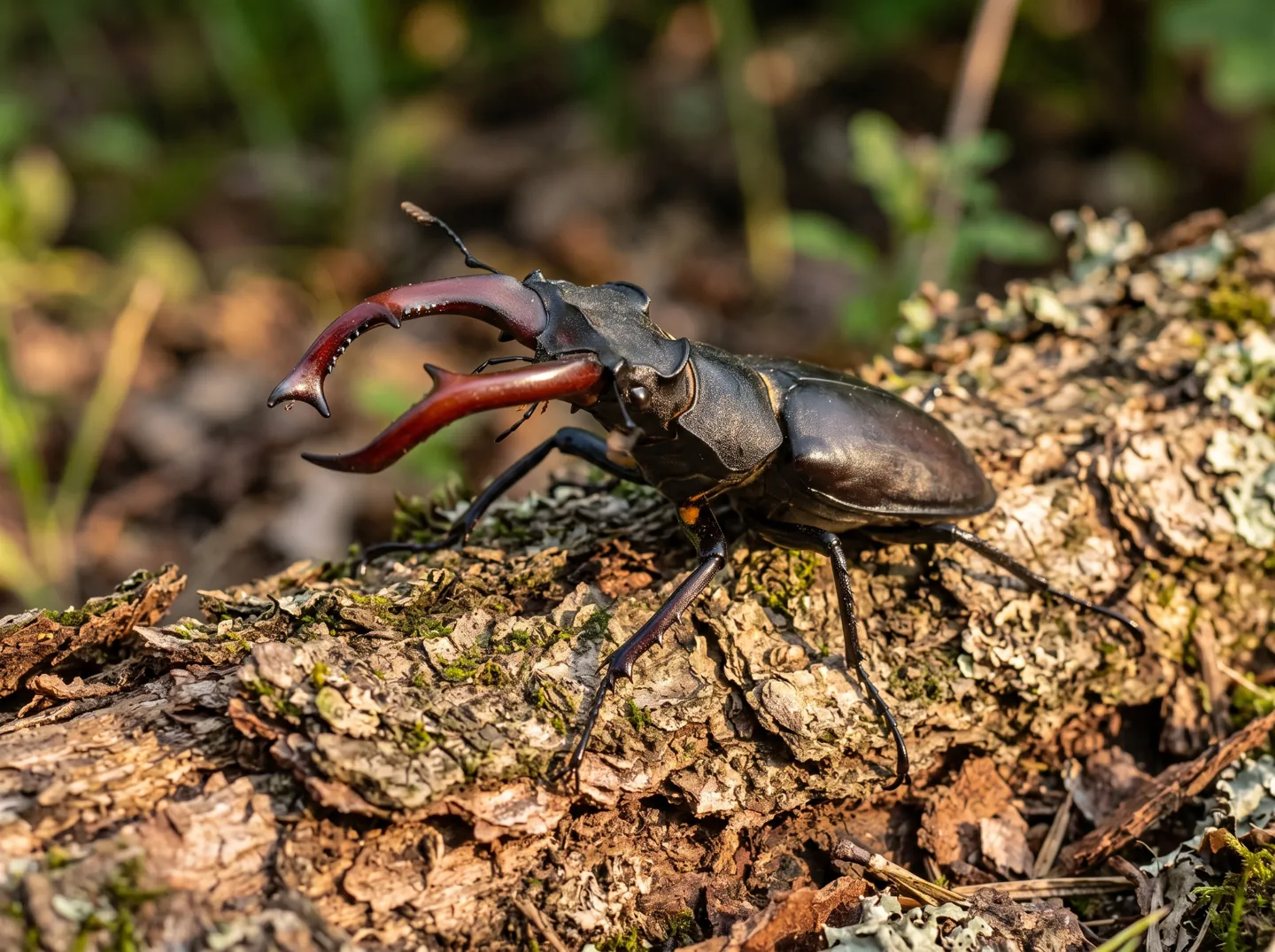
Larvae tunnel through and feed on decaying wood for several years. Adults live only a few weeks in summer and usually die by August.
STAG BEETLE · NATURAL HISTORY MUSEUM
Most female stag beetles travel no more than 20 metres and return to where they emerged to lay eggs, says the PTES and Buglife leaflet, so a population can die out if there is not enough dead wood nearby.
BUILD A LOG PYRAMID
An afternoon's work, years of use.
The PTES and Buglife leaflet says log pyramids can be built at any time of year. This is their method in four steps.
Gather broadleaved logs
Use wood from any broadleaved tree, with logs at least as thick as an adult's arm.
Dig and bury them upright
Their diagrams show logs set about 50 cm deep, with soil filling the spaces between them.
Choose partial shade
Partial shade and partly buried logs stop the wood drying out.
Let plants grow over
Plants keep in moisture and give shade. Then record your log pile on the PTES map.
AI-generated image, not a photograph of a real person or place.AI-generated image, not a photograph of a real person or place.
WHY STAG BEETLES STRUGGLE
Too tidy is the problem.
The Natural History Museum says the main reason stag beetles are struggling is the loss of dead wood, through the tidying of woodland, parks and gardens and the loss of broadleaved woodland to farmland, plantations and building.
Small changes help too. The PTES and Buglife leaflet suggests keeping a lid on water butts, where beetles can drown, avoiding polythene weed sheeting, which can trap emerging beetles, and trying not to use pesticides.
Questions
Questions people ask
What wood should I use for a log pile?
The PTES and Buglife leaflet suggests wood from any broadleaved tree, in logs at least as thick as an adult's arm. A general log pile can also include wood chips, old firewood and fallen branches.
When can I build a log pyramid?
At any time of year, according to the PTES and Buglife leaflet.
Are stag beetles dangerous?
No. The Natural History Museum says they are harmless and can be picked up safely to move them out of harm's way. Males can give a small pinch only if encouraged.
What if I dig up a stag beetle larva?
The Natural History Museum advises putting it back exactly where you found it, or burying it somewhere safe with as much of the original rotting wood as possible.
Are stag beetles protected?
Yes. The Natural History Museum says Lucanus cervus is covered by the amended Wildlife and Countryside Act 1981, which aims to stop the beetle being collected for sale.